In short: to price your social media management services, first work out your minimum rate from your monthly costs, your own pay and the hours you can really work. Then sell monthly packages (a retainer) rather than single posts, offer three clear options, keep ad spend separate, and ask for payment monthly in advance. Price by the work and the value to the client, not by what the cheapest person on Instagram charges.
“How much should I charge?” is the question we hear most from students at the School of Social Media Managers. It is also the question that keeps many talented people stuck. They charge too little, take on too many clients, and burn out within a year.
Learning how to price social media management services is not about finding a magic number. It is a simple method you can repeat for every client. This guide walks you through it, step by step, with examples from the kind of businesses you will meet in Lagos, Abuja and beyond.

How do you price social media management services?
Good pricing has three layers. Think of them as a floor, a structure and a conversation.
- The floor: your minimum rate. Below this, you are paying to work.
- The structure: how you charge (monthly, per project or hourly) and the packages you offer.
- The conversation: how you present the price to a client and agree the terms.
Most beginners skip the floor. They look at what others charge and copy it. The problem is that you do not know that person’s costs, speed or skill. Their price may be ruining their business quietly.
Step 1: Work out your minimum monthly rate
Do this once, with your own numbers, and update it every few months.
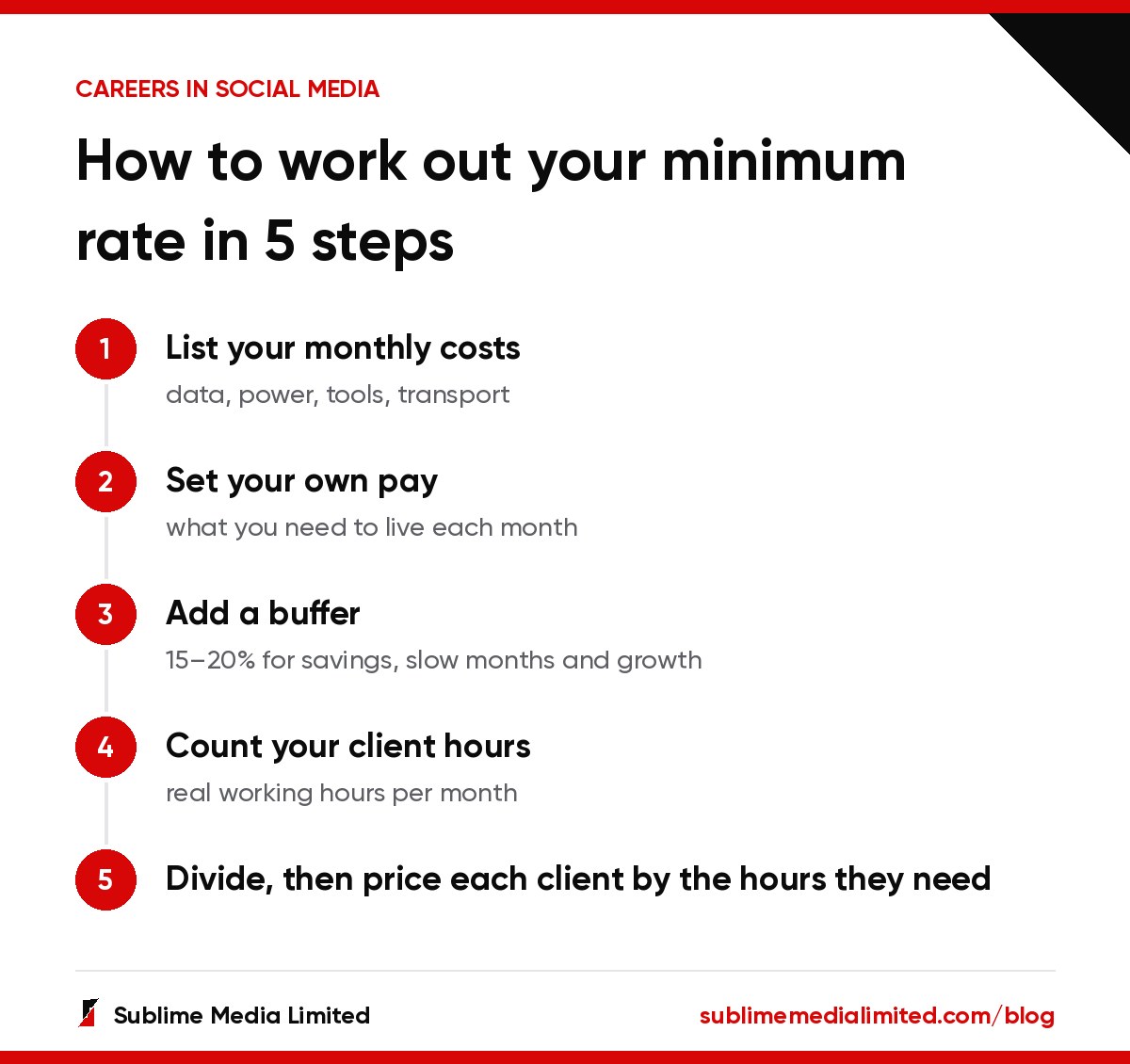
- List your monthly costs. Data, electricity or fuel for the generator, your phone, apps and tools (design, scheduling, editing), transport to client shoots, and a little for training.
- Set your own pay. What do you need each month to live comfortably? Rent, food, family support, savings. Be honest.
- Add a buffer of 15–20%. This covers slow months, late payments, equipment repairs and growth.
- Count your real client hours. Not every working hour is billable. You also spend time pitching, learning, doing admin and creating your own content. Be realistic: billable hours are often well below your total working hours.
- Divide and price by hours. Your total monthly need divided by your client hours gives you a minimum hourly figure. Estimate how many hours each client needs and multiply.
A worked example
Here is how it looks with made-up numbers. These figures only show the method; they are not a price list.
| Item | Example amount |
|---|---|
| Monthly costs (data, power, tools, transport) | ₦60,000 |
| Your own pay | ₦300,000 |
| Subtotal | ₦360,000 |
| Plus 20% buffer | ₦432,000 |
| Client hours available per month | 80 hours |
| Minimum per hour | ₦5,400 |
| One client who needs 25 hours a month | ₦135,000 minimum |
Now you know that if a client asks you to manage two platforms with daily replies for a price that covers only 10 hours, the answer is either “no” or “here is a smaller package for that budget”.
Hourly, per post or monthly retainer: which pricing model is best?
There are four common ways to charge. Each one has a place.
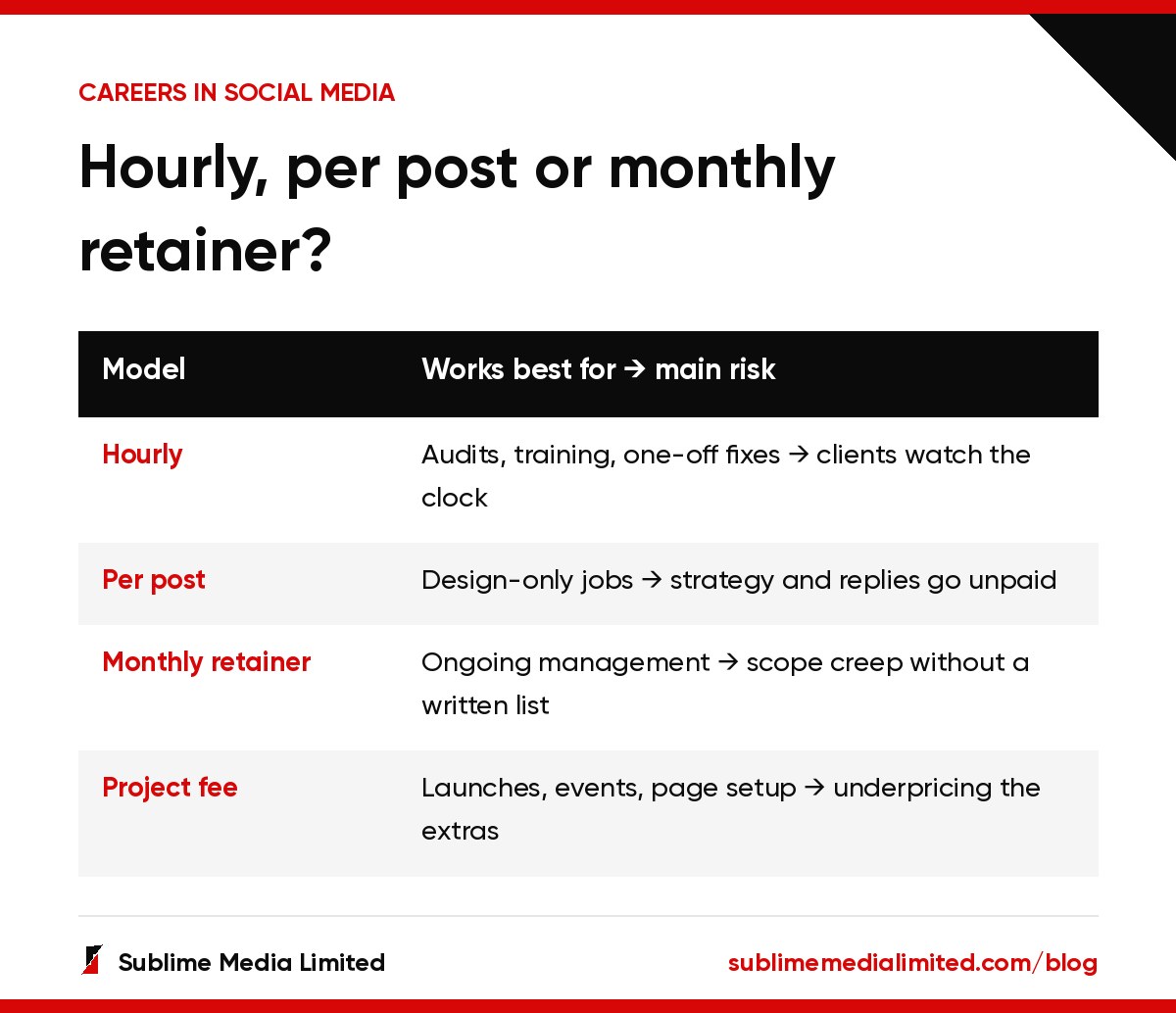
- Hourly: good for audits, training a client’s staff or one-off fixes. The downside is that clients start watching the clock, and you earn less as you get faster.
- Per post: clients understand it easily, but it only pays for the design. The planning, captions, replies and reporting that actually bring sales end up unpaid.
- Monthly retainer: a fixed fee every month for an agreed list of work. This is the best fit for ongoing management, because it pays for the whole job and gives you predictable income.
- Project fee: a one-off price for a launch, an event campaign or setting up a new page.
Our advice for most social media managers in Nigeria: build your business on monthly retainers, and use project fees for extras. The only real risk with a retainer is “scope creep”, when the client keeps adding small tasks. You avoid it with a written list of what is included.
How to build three social media management packages
Clients find it easier to choose between options than to say yes or no to one price. Three packages work well:
| Starter | Growth | Premium | |
|---|---|---|---|
| Platforms | 1 | 2 | 3 |
| Posts per month | 8 | 12 | 20 |
| Reels or TikToks | 2 | 4 | 8 |
| Replies to comments and DMs | Weekdays | Daily, business hours | Daily, extended hours |
| Report | Monthly summary | Monthly report | Report and review call |
Price each one using your minimum hourly figure and the hours each package takes, then round up. A few tips:
- Make the middle package the obvious choice. Most clients pick it, so make sure it is the one that gets them results.
- Price video properly. A Reel takes far longer than a graphic: planning, filming, editing and captions.
- Sell extras separately. Ads management, photo shoots, influencer outreach and event coverage can all be add-ons.
- Name packages by outcome, not size, if it suits your niche: “Launch”, “Grow”, “Lead”.
If you want ready-made package sheets, proposal templates and a client onboarding form, the Social Media Manager Starter Kit includes 50+ templates you can edit with your own prices.
How much should a beginner social media manager charge?
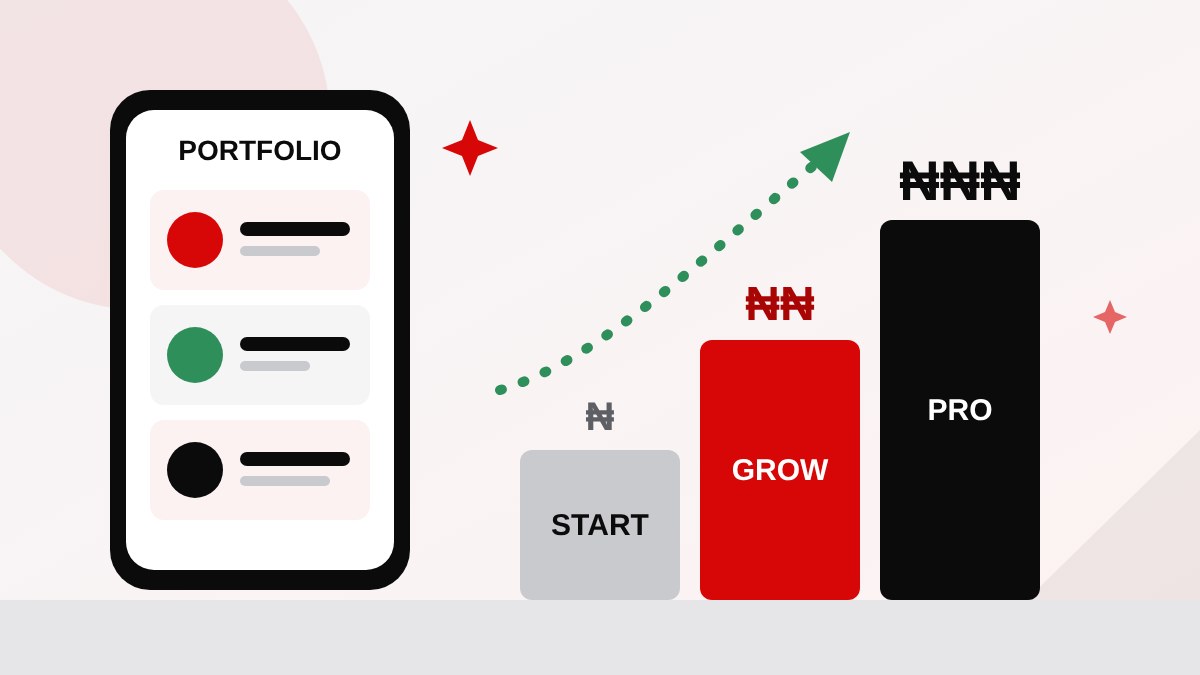
When you have no clients yet, it is tempting to work for free “for exposure”. One or two practice accounts can help you build a portfolio. After that, free work teaches clients that your time has no value.
A better approach for beginners:
- Charge your minimum rate, not below it. Your floor protects you even when you are new.
- Offer a smaller scope, not a smaller rate. If the budget is tight, give fewer posts or one platform.
- Use a short starter period. Agree a first month at an introductory price, in writing, with the full price clearly stated for month two.
- Collect proof as you go. Screenshots of reach, enquiries and sales, with the client’s permission. These are what let you charge more later.
If you are still building your skills and your first portfolio, our guide on how to become a social media manager in Nigeria covers the first steps.
How to quote a client with confidence
Never open with your price. Start with questions, so your quote fits the client’s real need.
- Ask about the goal. More orders, more bookings, more enquiries? “Grow the page” is not enough.
- Ask about the current situation. Who posts now? Who replies to DMs? Are they running ads?
- Recommend one package. Explain why it fits their goal, and show the other two as alternatives.
- Send the price in writing, with the scope. A figure on its own invites haggling. A figure with a clear list of work shows value.
- Give a clear next step. “If you’re happy, I’ll send the agreement and invoice today.”
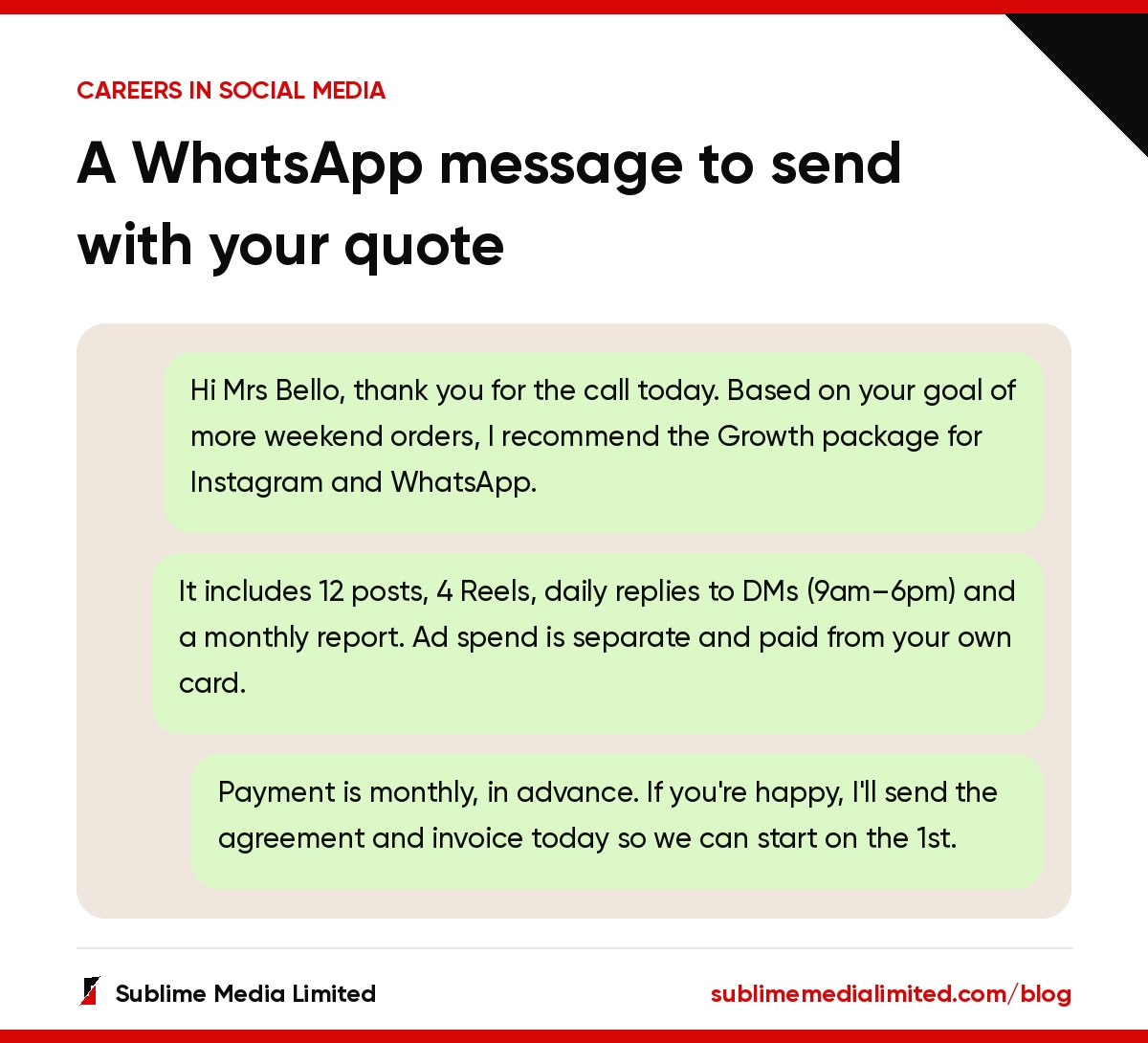
Here is a message you can adapt and send on WhatsApp after a call:
What if the client says “it’s too much”?
Do not drop your rate. Ask what budget they had in mind, then remove work to match it: fewer posts, one platform, or replies only on weekdays. You keep your value and they still get help. Some clients will still say no, and that is part of business.
It also helps to understand pricing from the business owner’s side. Our article on social media management cost in Nigeria explains what clients are told to look for in a quote.
How to get paid on time
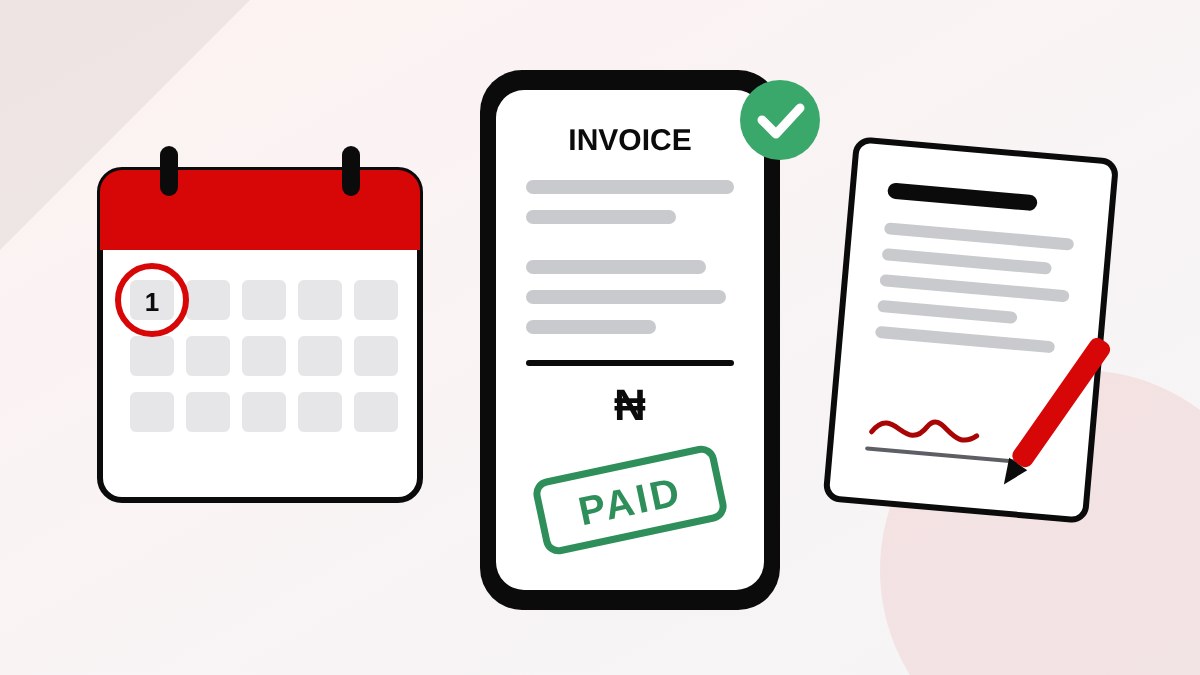
Late payment is one of the biggest headaches for freelancers. Set your terms before you start, not after the first invoice is overdue.
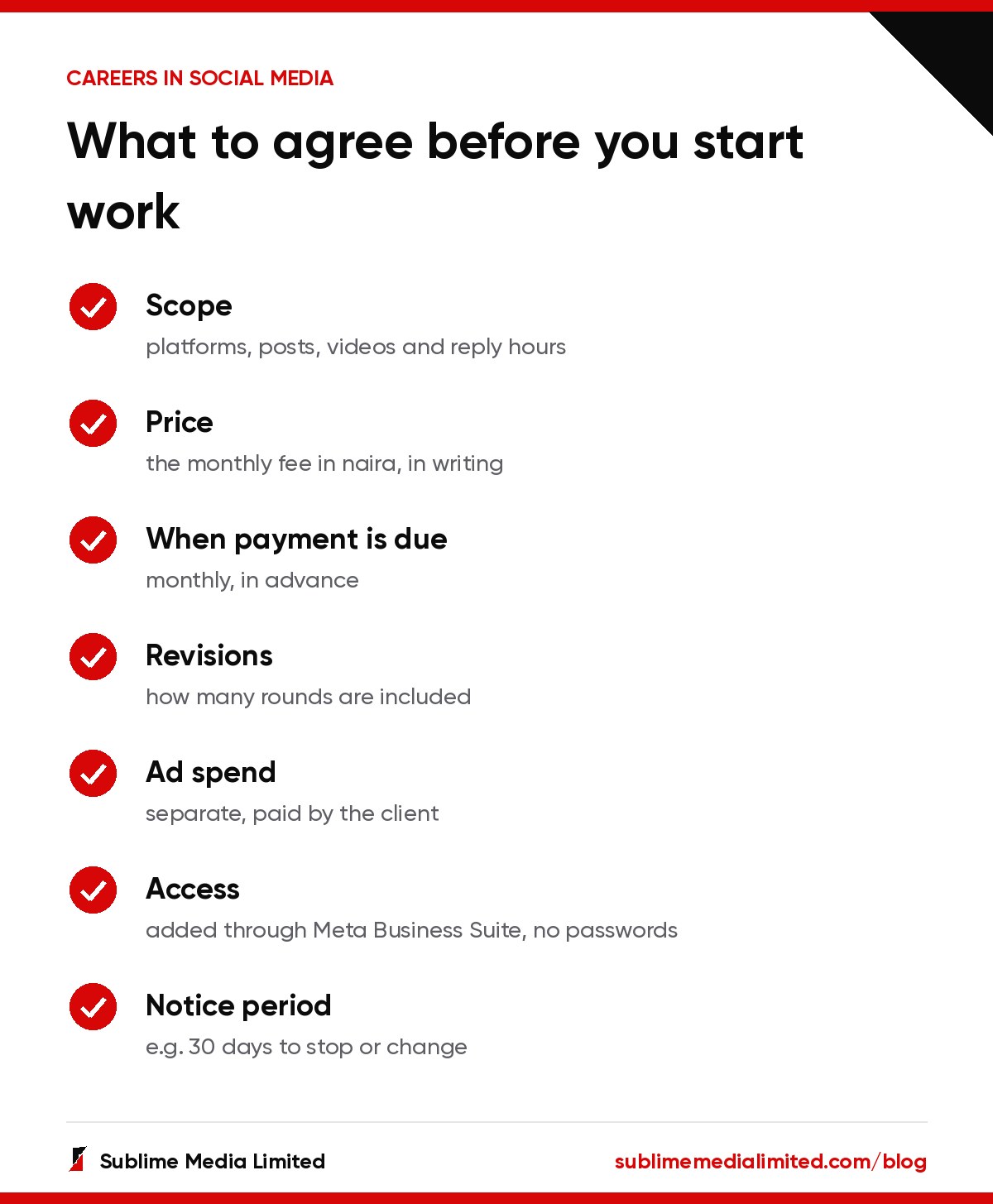
- Ask for payment monthly, in advance. You start the month once that month is paid. For one-off projects, ask for at least half upfront.
- Send a proper invoice. Include your name or business name, the client’s name, the package, the month it covers, the amount in naira and your bank details. Tools like >Paystack Invoices let clients pay by card or transfer from a link.
- Keep ad spend out of your account. The client should pay Meta or TikTok directly from their own card. Remind them that Meta adds 7.5% VAT to ads bought from Nigeria, as >reported by TheCable, so they budget for it.
- Never ask for passwords. Ask the client to add you as a partner or team member in Meta Business Suite. Meta explains how in its guide to >giving a partner access to business assets. The client stays the owner, and you look professional.
- Agree a notice period. For example, 30 days’ notice to stop or change the package.
When and how to raise your prices
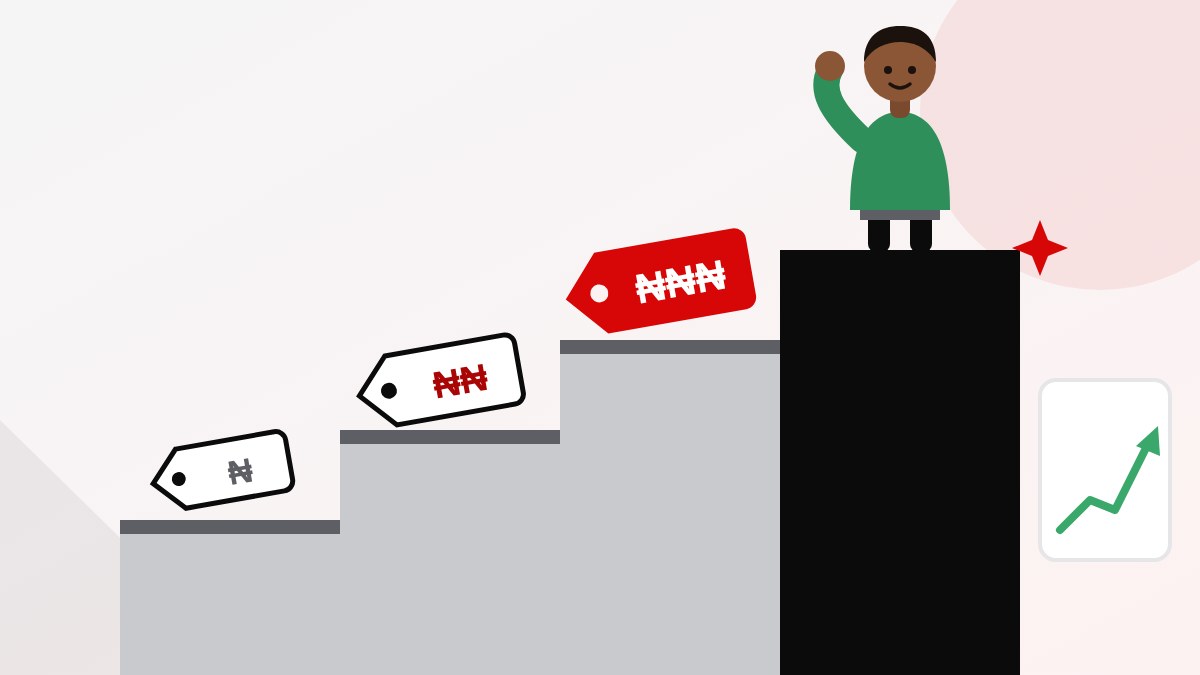
Your first price is not your forever price. Review it every six to twelve months, or sooner if:
- you are fully booked and turning work away;
- your costs (data, power, tools) have gone up;
- you now have clear results to show, such as more enquiries or sales for clients.
Charge new clients the new rate straight away. For existing clients, give written notice, ideally 30 days, thank them, and remind them what they get. A good client who values your work will usually stay.
Results are what make higher prices easy to accept. At Sublime Media, we grew the Ilorin Emirate Mall Instagram account from 0 to 13K followers in three months, and that kind of proof does more for your rates than any discount ever will.
Common pricing mistakes to avoid
- Copying someone else’s price without knowing their costs or workload.
- Charging per post for full management, so replies and strategy go unpaid.
- Starting work before payment, then chasing money for weeks.
- Saying yes to “small extras” that slowly double your workload.
- Discounting your rate instead of reducing the scope.
- Never reviewing prices while costs keep rising.
Price with confidence
Pricing gets easier once it is a method, not a guess. Know your floor, sell monthly packages, put everything in writing and raise your rates as your results grow.
If you want to learn the full skill set behind these prices, from strategy to reporting, join the School of Social Media Managers. You can start with our Social Media Management Mastery course or the e-book, and join our free >WhatsApp community for tips every week.
Frequently asked questions
How much should a beginner social media manager charge in Nigeria?
There is no fixed rate, so start from your own numbers. Add up your monthly costs and the pay you need, divide by the hours you can really work, and price each client by the hours their account will take. As a beginner you can charge near that minimum, but never below it, and plan to raise your price once you have results to show.
Should I charge per post or per month?
Per month is better for most ongoing work. A monthly retainer pays for planning, posting, replies and reporting, not just designs, and it gives you steady income. Per post pricing suits design-only jobs, but it often leaves strategy and community management unpaid. Use a project fee for one-off jobs like a launch or a page setup.
Should a social media manager include ad spend in their fee?
No. Keep your management fee and the client's ad spend separate. The fee pays for your work; ad spend is paid to Meta or TikTok to show the ads. Ask the client to pay ad spend from their own card in their own ad account. You can charge a separate fee for managing the ads, but do not let ad money pass through your account.
How do I tell a client my price without losing them?
Ask about their goal first, then recommend one package that fits it, and send the price together with exactly what is included and a clear next step. Offering three packages helps, because clients compare your options instead of comparing you with someone cheaper. If the budget is tight, reduce the work, not your rate.
When should I raise my social media management prices?
Review your prices every six to twelve months, and sooner if you are fully booked, your costs have gone up, or you now have strong results to show. Charge new clients the new price straight away. Give existing clients written notice, ideally 30 days, and explain what they get. Some may leave, and that is fine.
Want the full system, step by step?
Social Media Management Mastery takes you from your first post to paid client work, with templates you can use right away.
See the course & e-book →
Zelia Kafene founded Sublime Media Limited in 2019 and leads its strategy work for brands across Africa. She also teaches at the School of Social Media Managers, where she trains new social media managers to do client-ready work.