In short: Instagram marketing for small businesses works when you treat your page like a shop. Set up a clear business profile, post a steady mix of products, Reels, customer proof and helpful tips three to five times a week, and reply to every DM fast with prices and a simple way to order. Use ads only to push posts that already work, and check your insights monthly to see what brings real sales.
Walk through any market in Lagos, Abuja or Port Harcourt and ask the traders where their customers come from. Many will say “Instagram”. For a lot of Nigerian businesses, Instagram is the shop window, the catalogue and the first conversation with a customer.
But being on Instagram is not the same as marketing on Instagram. Plenty of pages post every day and still hear “I’ll get back to you” in the DMs. This playbook covers Instagram marketing for small businesses from the ground up: your profile, what to post, how to make Reels, how to turn DMs into sales, when to pay for ads, and how to tell what is working.
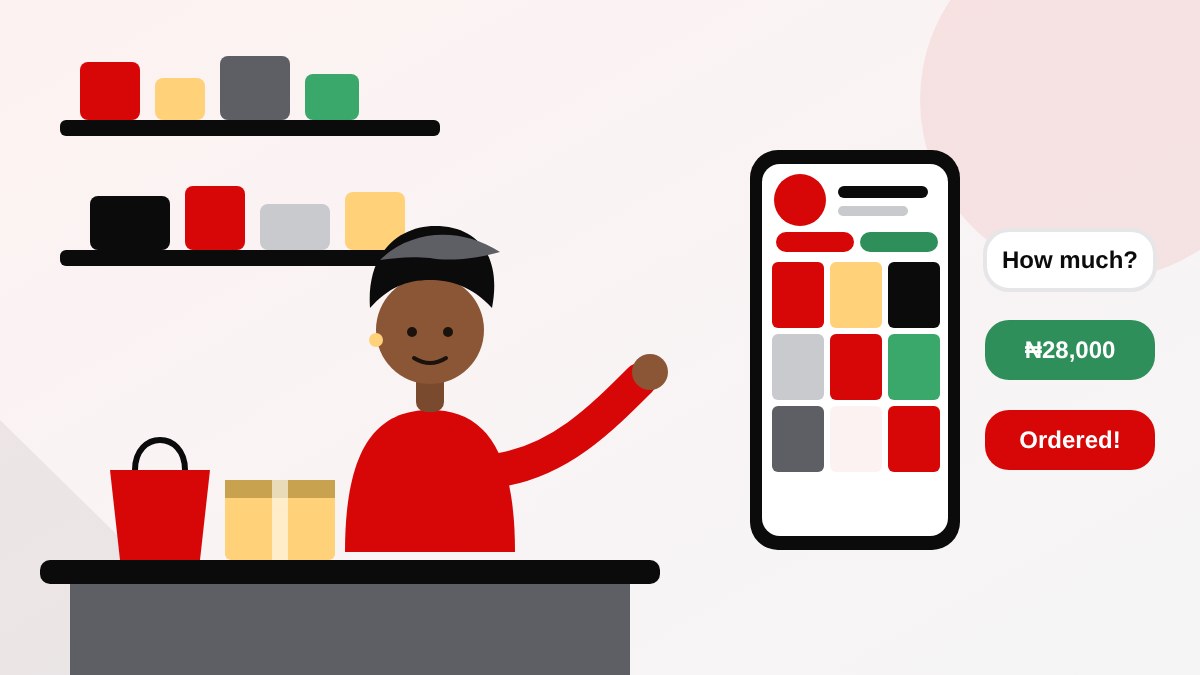
Is Instagram good for small businesses in Nigeria?
For most businesses that sell to everyday customers, yes. Fashion, beauty, food, cakes and small chops, events, interiors, fitness, real estate and many service businesses do well, because their products look good on a phone screen.
Instagram also plays a quiet but important role: it is where customers check if you are real. Someone sees your product in a friend’s Story or a Reel, taps your profile and decides in a few seconds whether to trust you. A page with a clear bio, real reviews and recent posts wins that moment. An empty or messy page loses it, even if your product is great.
Instagram is less useful on its own if you sell mainly to other businesses or to people who do not use the app. Even then, it can work as your “proof” page, with LinkedIn or WhatsApp doing the selling.
How to set up your Instagram business profile
Before you plan a single post, fix the page people land on.
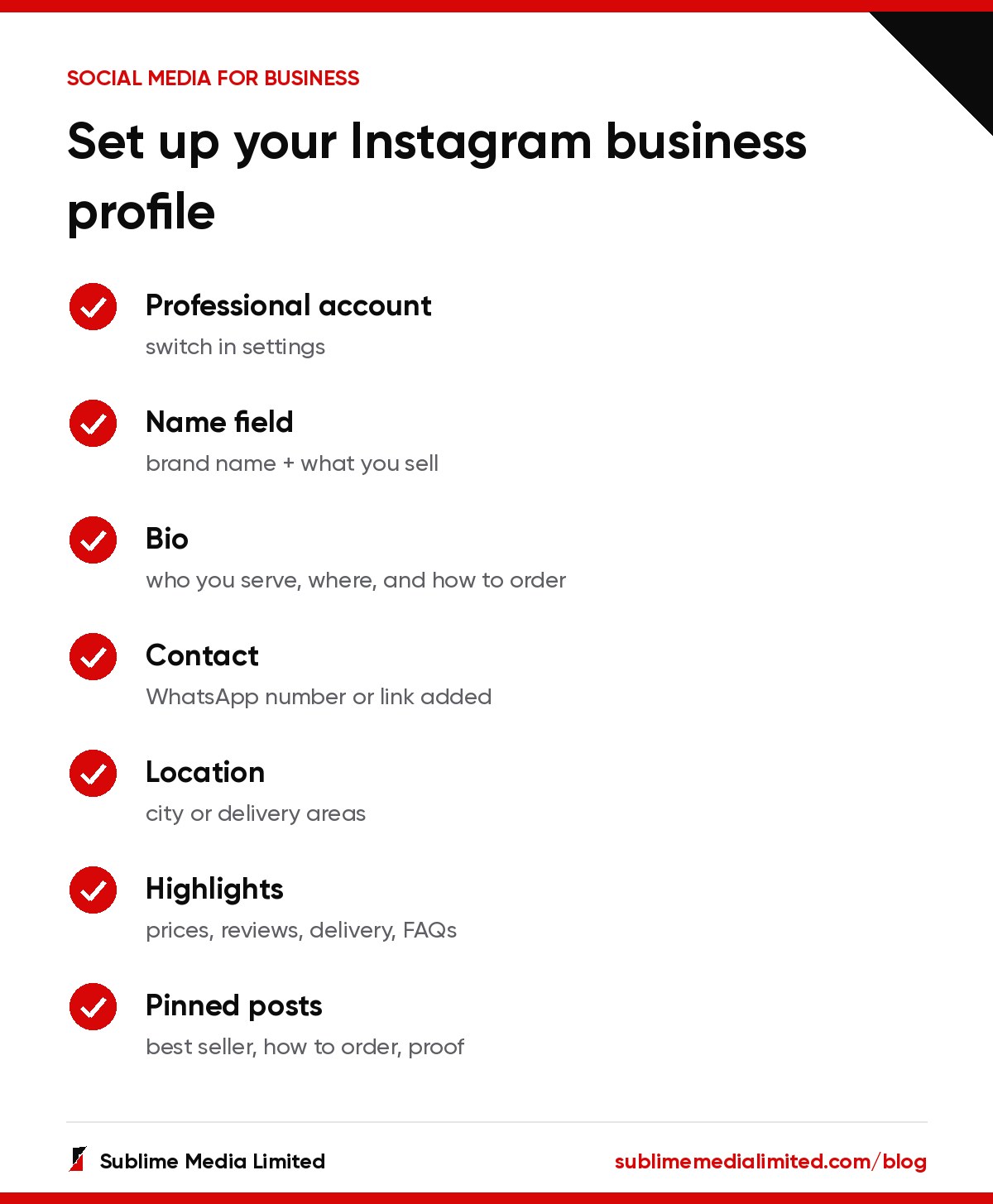
- Switch to a professional account. In settings, choose “Account type and tools” and switch to a professional (business) account. This unlocks insights, contact buttons and ads.
- Use the name field well. Your name field can be searched. “Tola’s Kitchen | Small Chops Lagos” tells people and search what you do.
- Write a bio that answers three questions: what you sell, who it is for, and how to order. Add delivery areas and opening hours if they matter.
- Add a contact option. Most Nigerian customers want to chat before they pay, so add your WhatsApp number or link to your profile.
- Create Story Highlights for prices or menu, reviews, delivery and payment, and FAQs. These answer questions before they reach your DMs.
- Pin your three best posts to the top of your grid: a best seller, a “how to order” post and a customer review.
What should a small business post on Instagram?
The biggest mistake we see is a page that only posts products with “DM to order”. It feels like a flyer, and people scroll past. Instead, pick three or four content pillars, the main themes you will post about again and again, and rotate them.
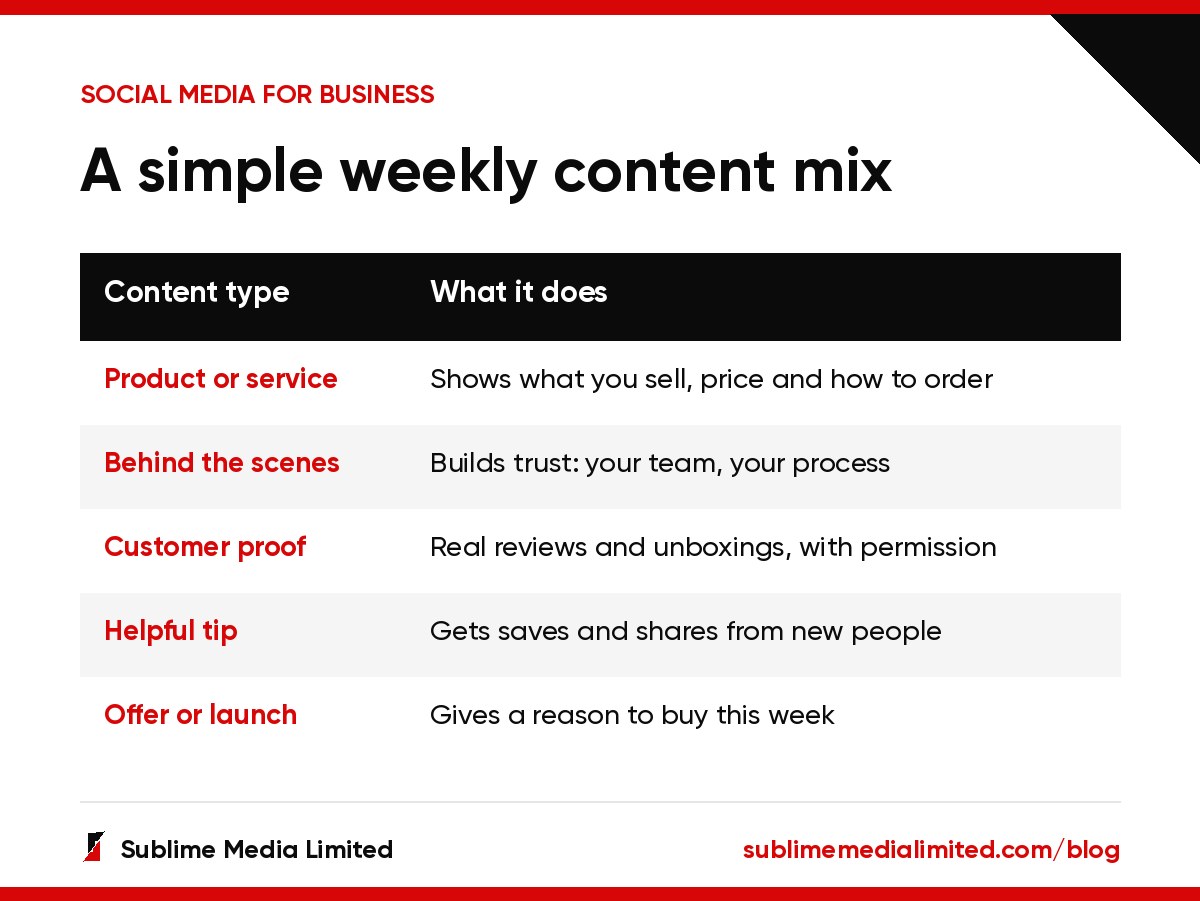
A mix that works for most small businesses:
- Products or services, with the price or a price range, what makes it special and how to order.
- Behind the scenes: packing orders, the kitchen at 6am, your tailor at work. This builds trust.
- Customer proof: real reviews, unboxing videos and before-and-after photos, shared with permission. Never make these up.
- Helpful tips linked to what you sell: “How to store your hair extensions”, “3 ways to style one ankara top”. These get saved and shared.
- Offers and launches that give people a reason to buy this week.
Two practical tips: Instagram now shows posts in a taller, rectangular shape on your profile grid, so design in portrait (4:5 or 3:4) rather than square. And always write captions for the reader, not the algorithm: say what the post is, why it matters and what to do next.
If you want a ready-made plan, our Social Media Manager Starter Kit includes content calendar and caption templates you can fill in for your own business.
How to make Instagram Reels that sell
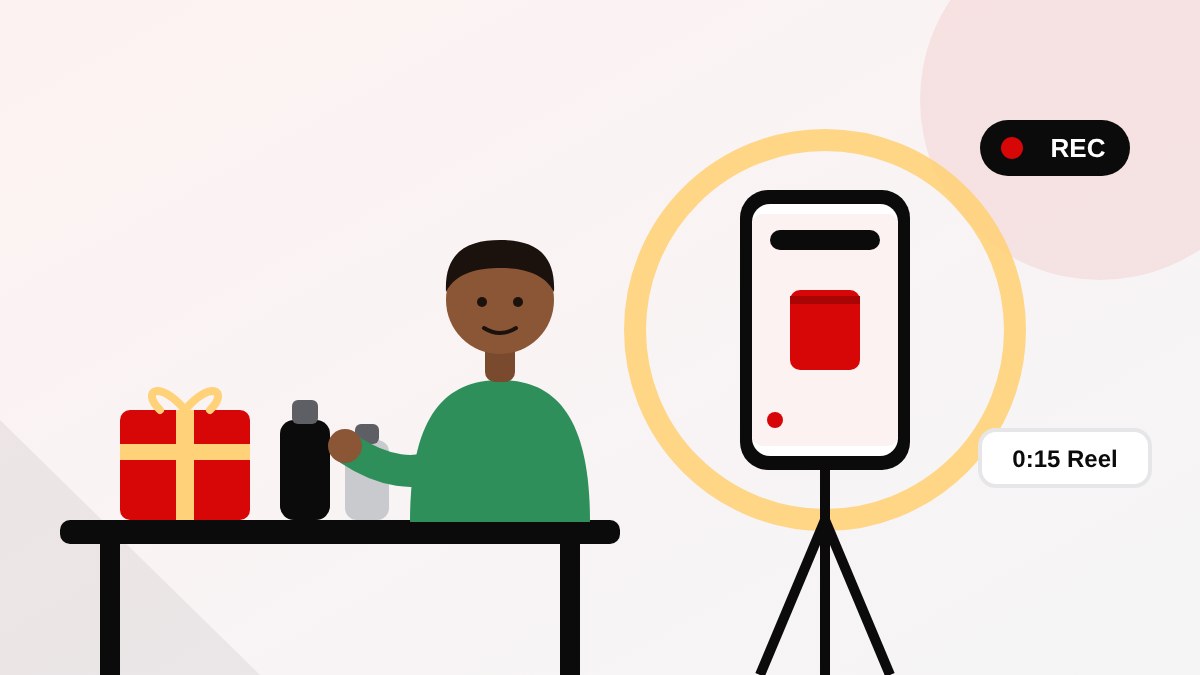
Reels are short vertical videos, and they are the main way new people find your business on Instagram. You do not need a studio. A phone, daylight from a window and a steady hand (or a cheap tripod) are enough.
What makes a good business Reel:
- A strong first second. Show the result first: the finished cake, the finished hairstyle, the full outfit. Then show how you got there.
- Text on screen. Many people watch without sound. Add a short line like “Packing a ₦50,000 order for Abuja”.
- One idea per Reel. One product, one tip or one story. Keep most Reels short and tight.
- Something worth sending. Instagram’s head, Adam Mosseri, has said that how often people share a post by DM is a key signal for reaching new audiences, as reported by >Search Engine Journal. Ask yourself: would a customer send this to a friend?
- A clear call to action. “Order on WhatsApp, link in bio” or “Comment SIZE and we’ll DM you”.
If your account has Trial Reels, use them. This feature, explained by >TechCrunch, shows a Reel to non-followers first, so you can test a new idea without it appearing to your existing followers. Look for the option just before you share.
How often should a small business post on Instagram?
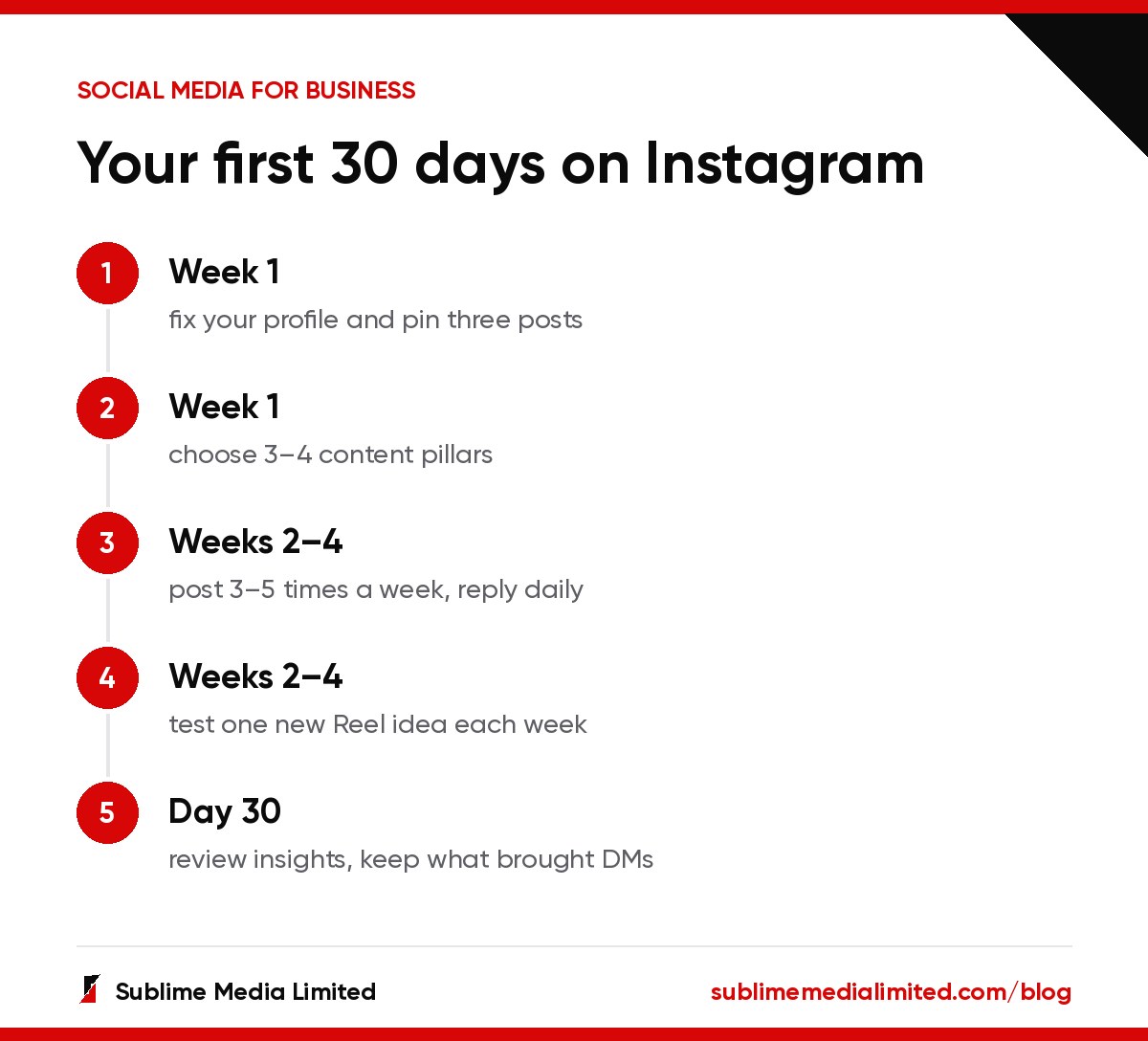
There is no magic number, but three to five posts a week, with one or two of them Reels, plus Stories on most days, is a realistic target for a small team. Stories are where your warm followers see daily updates: new stock, a poll, a customer’s message, “only 3 left”.
Consistency beats volume. Three good posts every week for six months will do more than daily posting for two weeks followed by silence. Batch your work: plan the week on Sunday, film several Reels in one session, and schedule posts in Meta Business Suite so you are not posting in a rush.
How to turn Instagram DMs into sales
This is where many Nigerian businesses lose money. A customer asks “how much?” and waits hours, or gets a one-word reply. By then they have bought from someone else.
- Reply fast. Set a target, such as within an hour during business hours.
- Give the price. “Check DM” in the comments and “DM for price” on every post frustrate many buyers. If you can, share prices or a range openly.
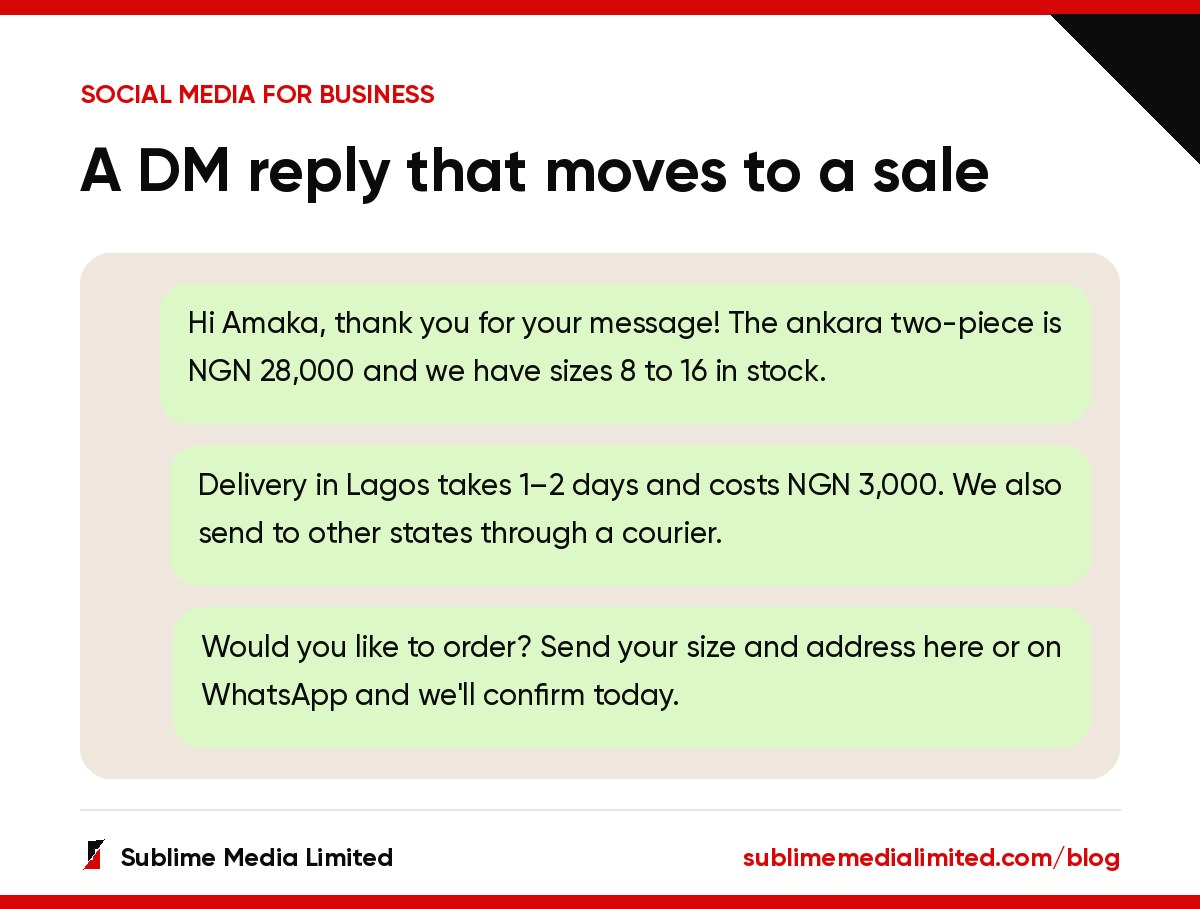
- Answer the next question too. Size, colour, delivery time, delivery cost and how to pay, all in one reply.
- Save quick replies. Instagram lets professional accounts save answers to common questions, so you can respond in seconds.
- Make the next step obvious. Move to WhatsApp if that is where you take orders, and confirm the order in writing.
Here is a reply you can adapt:
Protect your customers and your name too. Use a business account number in your business name, send receipts, and never ask customers to pay into a personal account they cannot match to your brand. Trust is your biggest asset in Instagram commerce.
How to get found: hashtags, search and collaborations
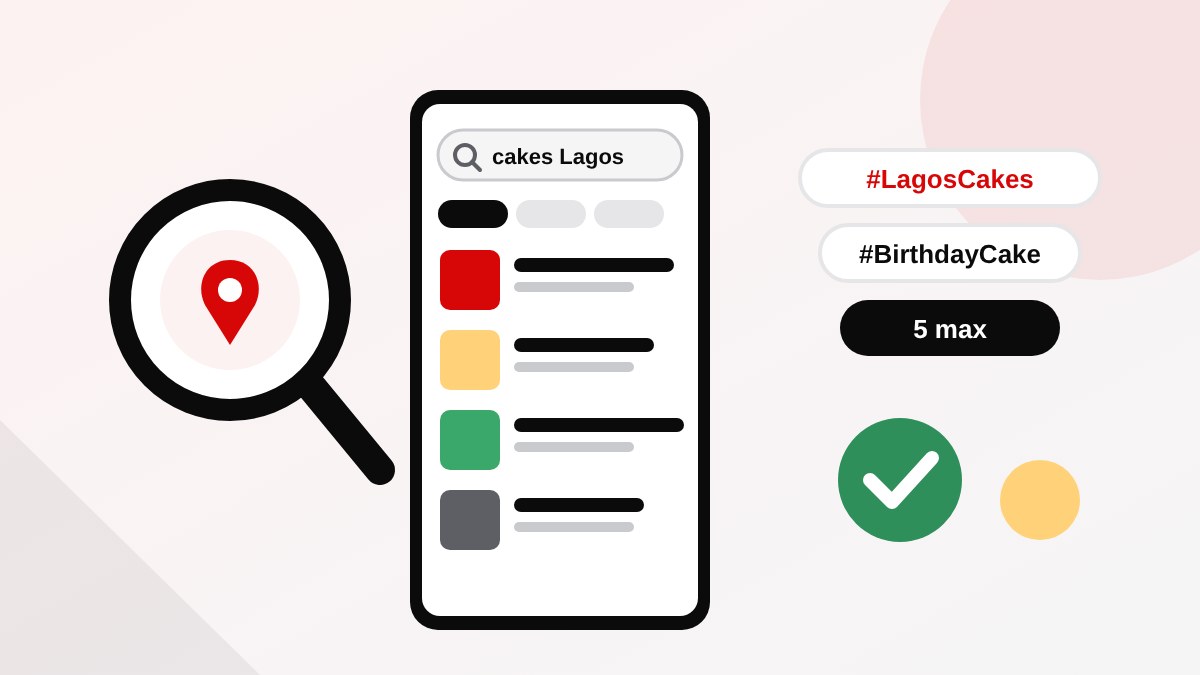
Hashtags matter less than they used to. Since December 2025, Instagram allows a maximum of five hashtags per post or Reel, as >Social Media Today reported. Use a few specific tags, such as your product and city (#LagosSmallChops), not broad ones like #business.
What helps more:
- Keywords in your name field, captions and on-screen text, written the way customers search: “bridal makeup Lekki”, “custom cakes Abuja”.
- Location tags on posts, so local buyers find you.
- Collab posts with complementary businesses or small local creators. A collab post appears on both accounts, so you reach their followers too.
- Customer tags. Ask happy customers to tag you in their Stories, then reshare them.
Should you boost posts or run Instagram ads?
Organic posting builds trust; ads add reach. Most small businesses should do both, in that order.
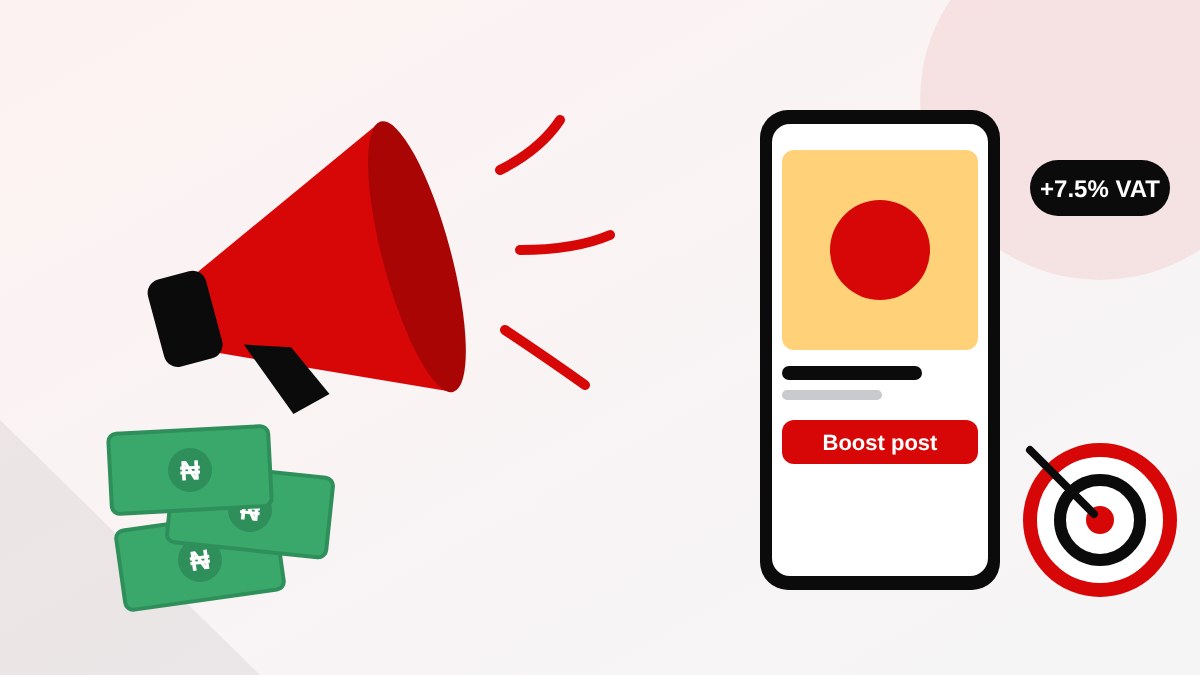
- Boosting is the easiest start. Choose a post that is already getting good reactions or DMs, tap “Boost”, and target people in your city or delivery area.
- Meta Ads Manager gives more control over your goal (messages, website visits, sales), your audience and your budget. It is worth learning once you boost regularly.
- Start small and test. Run each ad for about a week before judging it, and change one thing at a time.
- Budget for VAT. Meta adds 7.5% VAT to ads bought from Nigeria, as >reported by TheCable.
- Keep ad spend in your own ad account, paid from your own card, even if a social media manager runs the ads for you.
Ads cannot fix a weak page. If people click through to an empty profile or wait a day for a DM reply, you are paying for visitors who will not buy.
How to measure what is working
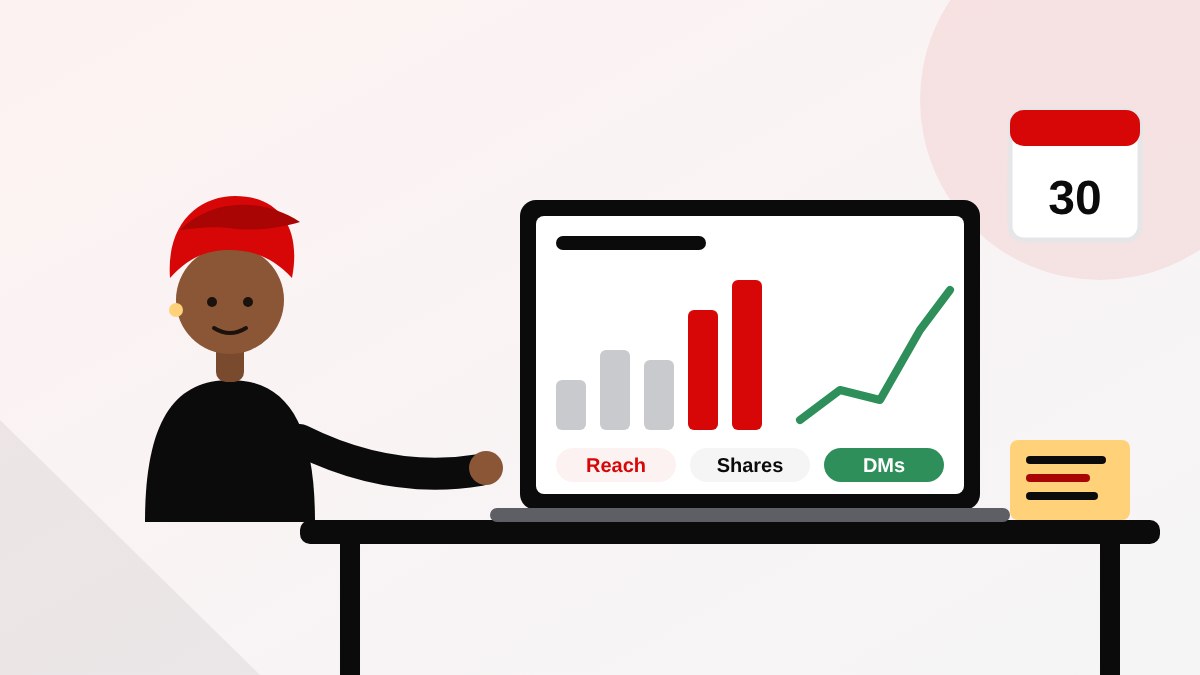
Likes feel good, but they do not pay rent. Once a month, open your Instagram insights and look at:
- Reach: how many people saw your content, and how many were not following you yet.
- Shares and saves: a sign that content is useful or worth passing on.
- Profile visits and link taps: people moving from interest to action.
- DMs and WhatsApp chats started: count them, and note which post or ad they came from.
- Sales: the number that matters. A simple notebook or spreadsheet of “where did you hear about us?” is enough to start.
Keep doing what brings conversations and sales, and drop what does not, even if it gets likes.
Instagram marketing for small businesses: common mistakes to avoid
- Posting only flyers and “DM to order” with no faces, stories or proof.
- Hiding prices and answering DMs slowly.
- Buying followers. They do not buy from you, and they make your real results look weaker.
- Posting every day for two weeks, then disappearing for a month.
- Boosting random posts without a goal.
- Using fake reviews or copied photos. Customers notice, and trust is hard to win back.
Want help with your Instagram?
Instagram marketing is simple, but it is not easy to do every week while running a business. That is why many owners bring in help. If you are weighing it up, our guide to social media management cost in Nigeria explains what a good package includes.
At Sublime Media, we plan content, film Reels, manage DMs and run ads for brands across Nigeria. We grew the Ilorin Emirate Mall Instagram account from 0 to 13K followers in three months. See our social media services, or get in touch and tell us about your business. You can also join our free >WhatsApp community for weekly tips.
Frequently asked questions
Is Instagram good for small businesses in Nigeria?
Yes, for most businesses that sell to consumers, such as fashion, beauty, food, events and home goods. Many Nigerian customers discover brands on Instagram, check the page to decide if the business is real, and then order by DM or WhatsApp. It works best when your profile is clear, you post regularly, and you reply to messages quickly.
How often should a small business post on Instagram?
Three to five times a week is a good target for most small businesses, with at least one or two Reels in that mix, plus Stories on most days. Consistency matters more than volume. It is better to post three good posts every week for months than to post every day for two weeks and then disappear.
How many hashtags should I use on Instagram?
Instagram now allows a maximum of five hashtags on a post or Reel. Choose a few specific ones that describe what the post is about, such as your product and your city, rather than broad tags like #love or #business. Clear words in your caption, on-screen text and profile name also help people find you in search.
Should I boost posts or run Instagram ads?
Boosting is a simple way to start: pick a post that is already getting good reactions and promote it to people in your area. For more control over your audience, budget and goal, use Meta Ads Manager. Start small, run each test for about a week, and keep ad spend separate from what you pay a social media manager.
How do I get customers on Instagram without paying for ads?
Post useful Reels that people want to share, reply to every comment and DM quickly, show real customer proof, and work with small local creators your customers already follow. Ask happy customers to tag you. Make ordering easy with a WhatsApp link and a pinned post that explains prices, delivery and how to pay.
Need a team to run your social media?
Sublime Media plans, creates and manages content for brands across Africa, with monthly reports you can read in five minutes.
Start a project →
Zelia Kafene founded Sublime Media Limited in 2019 and leads its strategy work for brands across Africa. She also teaches at the School of Social Media Managers, where she trains new social media managers to do client-ready work.